
Text and photos by SoSaLa
Last Tuesday, I had the opportunity to check out a live performance by Les Goodson, a New York City-based jazz saxophonist, composer, bandleader, respected street musician, and educator specializing in history and geography. Les, whose full name is Ervin Lester Goodson, is also known for his involvement in the civil rights movement and has played alongside notable musicians like William Hooker and Sun Ra. He was admitted to Columbia University in 1969 as part of a record number of Black students that year and graduated in 1973.
I first heard about Les through my favorite radio station, WFMU, during a September interview with host Dave Sewelson. This was the first time I “ran into him,” although I usually know most of the jazz musicians in New York. The interview was intriguing, particularly when he described himself as primarily a street musician, or a busker. Les typically performs from 1 to 5 PM at the corner of 54th Street and 5th Avenue in New York City. I admired his work ethic and pride in his craft, calling him a “Street Musician with Attitude.” After listening to the podcast, I searched for him on Facebook and reached out. We ended up having a deep, lengthy phone conversation, which led me to invite him to my podcast, MFM Speaks Out, next year.
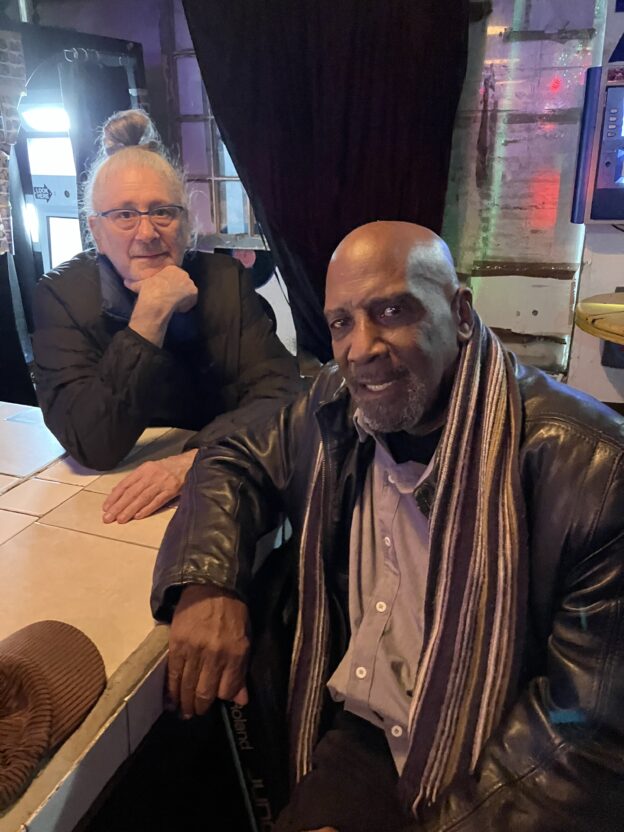
When I entered The Shrine for his performance, someone at the bar shouted “Sohrab,” which took me by surprise. It was Les who recognized me by my hair knot. Before we chatted, I needed to use the restroom downstairs, which had an interesting aesthetic with photos, flyers, and a bit of graffiti. After returning to the bar, we began our conversation by asking each other about our personal lives and music careers. Les was very open and had no secrets.
While we talked, a young jazz trio led by trumpet player Daelan Rittersdorf was performing. Shortly after, Les’ four sidemen arrived: Tia Kareem (vocals/poet), Donald Nicks (bass, Ray Ayers), John Cooksey (drums, Ashford & Simpson), and Marcus Persiani (keys and music director, Wynton Marsalis).
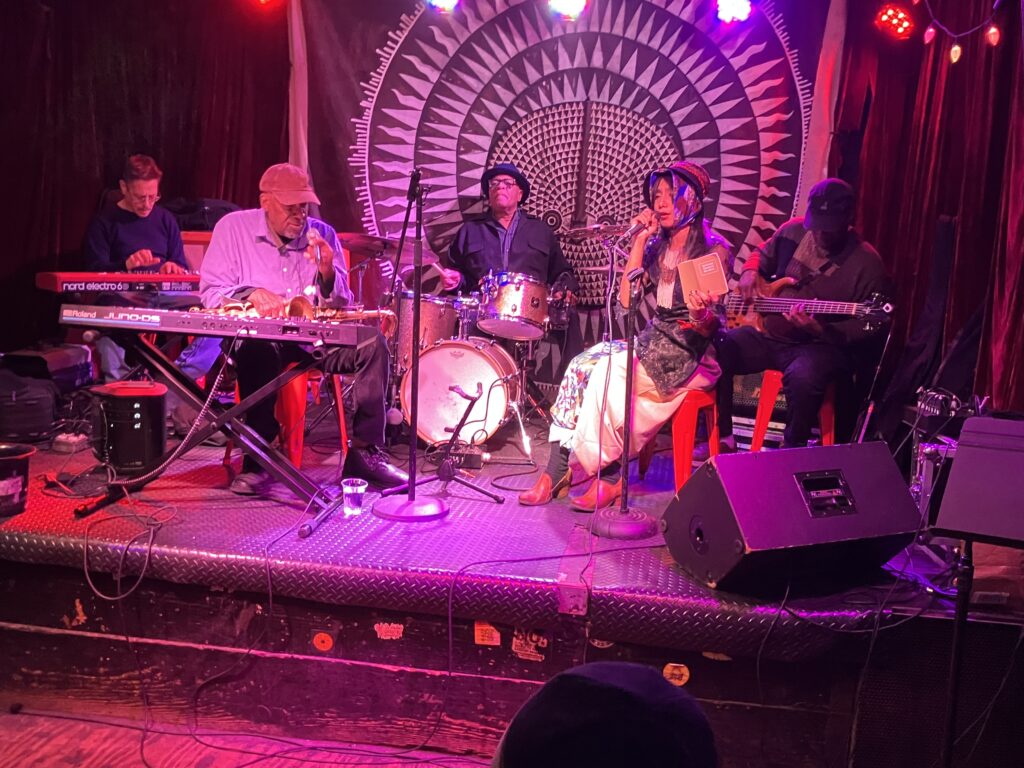
At 10 PM, Les and his bandmates took the stage. As the leader, Les sat in front with his keyboard and tenor saxophone. Behind him were Markus on keys, Donald on bass, and John on drums, with Tia, a Bangladeshi singer, poet, and dancer, sitting next to him. Les asked me to handle the video recording on his iPhone.
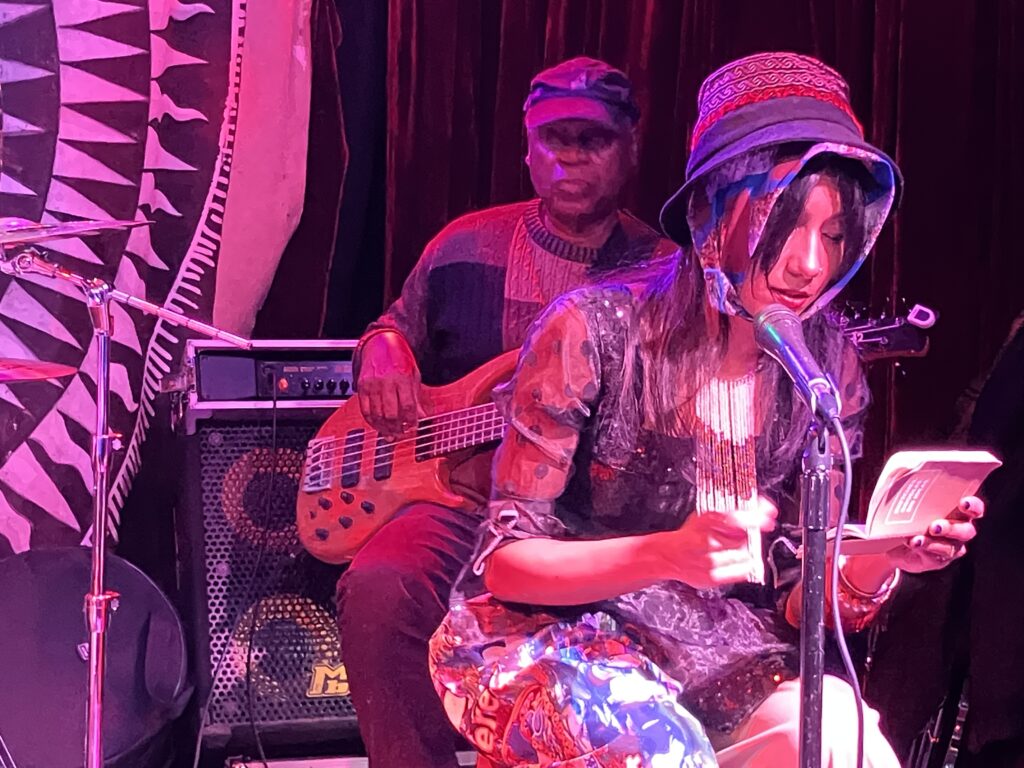
Without a soundcheck, the band began to play. Aside from John Coltrane’s “Equinox,” they performed original tunes. Tia’s presence and voice enriched every song, as she either sang or recited in Bengali. Although I’m not a music critic, I would describe the band’s sound as Les defined it in our conversation: “soulful, spiritual, and cosmic African jazz.” The band, made up of professionals, was cohesive and solid under Les’ direction, and they clearly enjoyed one another’s company. Their willingness to play with Les speaks volumes about the respect they have for his musicianship.
During the first set, Les initiated melodies and themes on his sax or with rhythm on the keyboard, and the band followed his lead. He delivered long, improvised sax solos while accompanying himself on keys with his right hand. The music was deeply rooted in jazz and African influences, reminiscent of Randy Weston‘s approach. His sax sound had the feel of John Coltrane, Gato Barbieri, Wayne Shorter, and Pharoah Sanders.
Generally, I love Les’s soft, bluesy, and melancholic sax sound, especially on his album Invisible Light. However, this time, he struggled to deliver his signature soulful tone because of poor miking, which made his sax sound thin, distant, and at times harsh. The lack of reverb also made his sax sound dry. I believe Les should do a short soundcheck and add some reverb to his mic before performing, even when time is limited. That said, fortunately, the audience didn’t notice that and enjoyed what they heard.
After the first set, I noticed no one was collecting donations, so I took the bucket and encouraged people to contribute. For those reluctant to donate, I reminded them that “music has value,” which prompted some to reach for their wallets. Those who tried to ignore me looked uncomfortable when they saw me throw some money into the bucket.
I advise Les to have someone managing the donation bucket, since asking the audience to donate from the stage doesn’t seem effective. I hate to see people enjoying the music and not showing their gratitude by donating.
Overall, it was a fantastic experience to enjoy “rooty, bluesy, jazzy” live music and see the audience grooving and dancing. I plan to support Les further and will invite him to my podcast after witnessing one of his street performances.
In closing, I’d like to encourage all music lovers to support live performances! Your passion helps keep music vibrant and authentic while fostering creativity in a world increasingly influenced by AI-generated sounds.
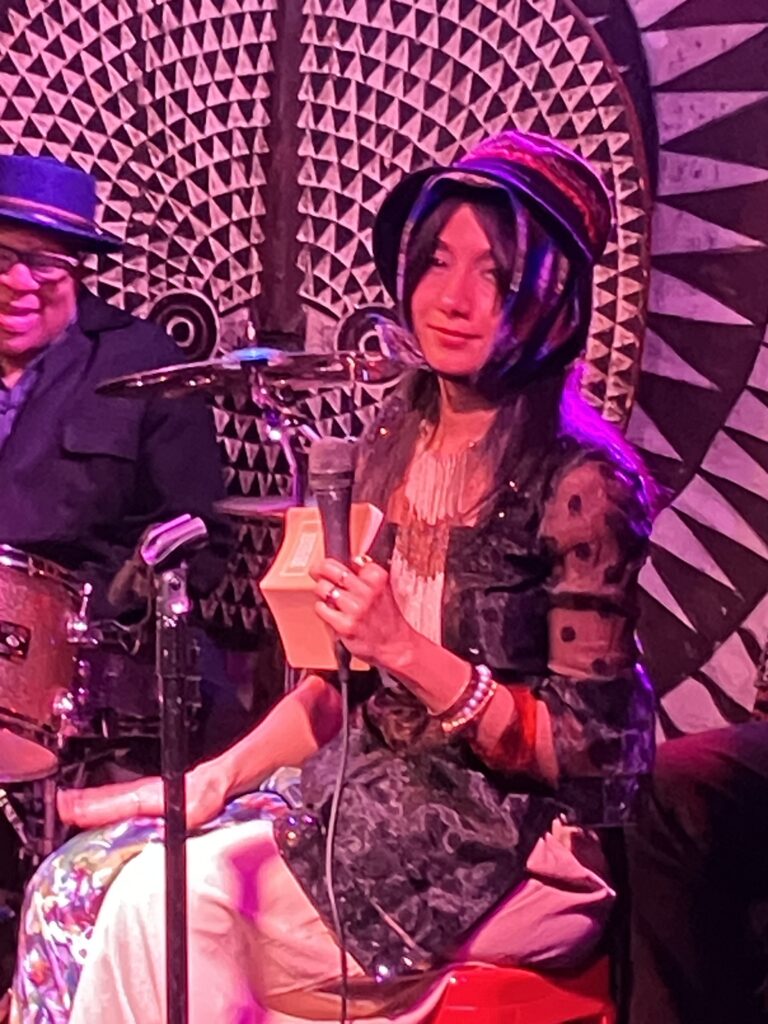
I absolutely love jazz music! It’s such an open and versatile genre, welcoming fresh ideas and influences. It’s amazing to see how Les beautifully blends Tia’s unique non-English language and spoken word to create something truly special and innovative. Jazz really knows no bounds!
Unfortunately, I couldn’t stay for the entire set because it was getting late.