Category Archives: Musicians

Crowdfunding Campaign: Legendary David Baker Music Release!

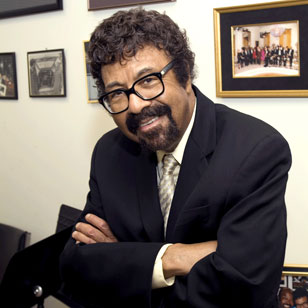
David Baker

Photo by Photo by Kendall Reeves

Be a part of a very special celebration of the life and music of jazz composer, author, and educator David Baker. Claim your recording now or join at any other reward level and support the recording, production, and major national release of Basically Baker Volume 2: The Big Band Music of David Baker by the Buselli-Wallarab Jazz Orchestra. Your contributions are tax deductible as funds will go to the Patois non-profit organization.

Upon release, 100% of all proceeds generated by sales of the recording will go directly to the David N. Baker Scholarship Fund.

Continue reading

A Documentary Film “The Blues Society” by Augusta Palmer…#BlackLivesMatter

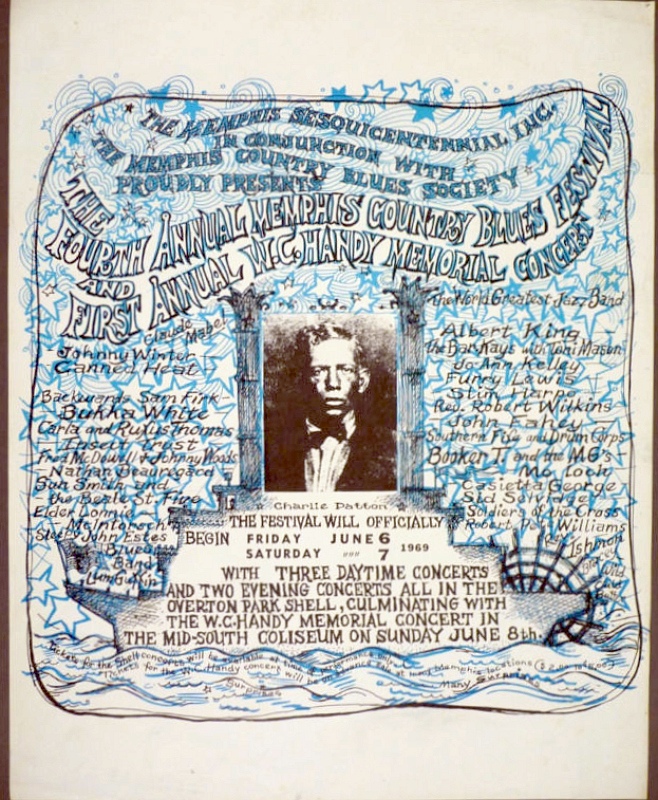
The Blues Society posterA movie about a collective of artists and musicians in Memphis who loved Blues music enough to change the way we think about it.

Text by Sohrab Saadat Ladjevardi

DooBeeDoo and I are happy to hear that our contributor and friend the cool Augusta Palmer has a new film The Blues Society in the works. She’s been thinking to do this documentary for quite a while. I think it’s the right timing to do this docu film. It’ll support perfectly the “Black Lives Matter” movement. The Blues stands for #BlackLivesMatter. It’s the voice of this movement.

Continue reading

Goodnight Sweet Prince: the Purple One Dead at age 57

Prince performing at Coachella 2008

(Photo by Micahmedia at en.wikipedia)

Text by Dawoud Kringle
There was almost nothing that could have prepared us for the news, when, on Thursday, April 21st, 2016, the news of the death of Prince was announced. At a time when he was riding the wave of yet another rise of success, suddenly it all ended.

Continue reading

Mark Deutsch (NY): Virtuoso Musician, Inventor, and Visionary

Text by Dawoud Kringle

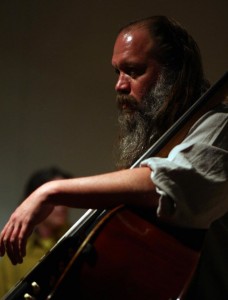
Mark DeutschOnce in a while, a true musical visionary emerges whose work redefines our perception of music, and how and why we make it. As a writer I am challenged to dig deep into my thesaurus to find adjectives adequate to the task of qualifying the work of a unique artist like Mark Deutsch. It is quite difficult to describe with words the astonishing psychic energy and breathtaking beauty of this music. One must experience it for oneself.

Mark Deutsch is a classically trained contrabassist and sitarist. In the late 1980s, Deutsch began exploring North Indian Hindustani classical music. His pursuits of this music, and work on sitar, inspired him to explore the mathematics of sound, particularly music’s underlying frequency structure. His sitar teacher, Ustad Imrat Khan, had told him that a westerner needed 20 years of study to properly hear the subtlety of intonation within Indian raga. He refused to accept this. So, he began to work out the mathematics of the musical intonation. He augmented this by playing recordings of Indian music in his sleep; especially recordings of the sarangi. His work revealed nonlinear mathematical patterns that exist in natural sound, the overtone series, fractals, the golden mean, and the Fibonacci series.

One night, he had a dream that he was playing sarangi on the contrabass. This was the initial inspiration that led to the design and construction of the Bazantar; an acoustic bass with additional sympathetic and drone strings. The instrument would take advantage of the nonlinear mathematical patterns found in sound. He began work on the first prototype of the Bazantar in 1993, and a finalized version was completed in October of 1997.

Continue reading

Trombonist Craig Shepard’s thoughts on preparing “Wind Shadows”

Text by Craig Shepard

Photo by Beth O'Brien

Photo by Beth O’Brien

Wind Shadows is for trombone and pure sine tones. Two speakers are set up, one to the left, and one to the right, and one sine tone comes out of each speaker. They are tuned almost exactly the same. The subtle difference creates a beating pattern that sweeps from left to right through the room once every ten seconds, seeming to change volume for a few seconds as it passes the listener. The trombone stands in between the speakers, and places tones very close to the sine tones, creating another beating pattern. Each trombone tone moves very slightly, and the beating sometimes slightly slows, and other times slightly speeds up.

Even though this is a solo performance, the music comes out of a community. For technical assistance, I am very grateful to Ben Manley and Dan Joseph. For guidance in understanding the piece, special thanks to Daniel Wolf at Material Press, and Alvin Lucier himself, partly through the excellent interviews given in the MusikTexte book Reflections.

Continue reading